If you want to start a personal training business in Florida, the good news is that getting started takes less paperwork than most people expect. You do not need a gym, a big budget or a state license to begin. You do need the right certification, a legal business, insurance and a plan for finding clients.
At FitnessGuyz, we have trained clients in homes, offices and community gyms across Broward County since 2013. This guide walks through the steps in the order we would do them.
Do You Need a License to Be a Personal Trainer in Florida?
In general, no. Florida does not issue a state license for personal trainers, and personal training is not on the state’s list of professions that require a Department of Business and Professional Regulation (DBPR) license. That is different from massage therapy or cosmetology, which are licensed.
What Florida does require is the same thing it requires of most businesses: a registered business and a local business tax receipt. Gyms and studios that sell memberships or prepaid packages can also fall under Florida’s health studio rules, so if you plan to open a facility rather than train clients one-on-one, check the requirements with the Florida Department of Agriculture and Consumer Services before you sign a lease.
Step 1: Get a Nationally Recognized Certification
There is no state license, but clients and insurance companies expect a certification from an accredited organization. Common choices include NASM, ACE, ACSM, NSCA and ISSA. Look for one accredited by the National Commission for Certifying Agencies (NCCA), because gyms and insurers often ask for that.
Expect to study for a few weeks to a few months, depending on the program and how much time you can give it.
Step 2: Add CPR and AED Certification
Most certifications and nearly all insurance providers require current CPR and AED training. A course through the American Red Cross or the American Heart Association usually takes a few hours and costs roughly $40 to $100. Keep the card current, because it expires, typically every two years.
Step 3: Choose and Register Your Business Structure
Most new trainers start in one of two ways:
- Sole proprietor. This is the simplest option. You operate under your own name, and you can register a fictitious name (a “doing business as” name) if you want a business name.
- LLC. A limited liability company can separate your business finances from your personal ones. In Florida, you file Articles of Organization through the Division of Corporations at Sunbiz.org. The state filing fee is about $125, including the registered agent designation.
An accountant can tell you which structure fits your income and risk. Many trainers begin as sole proprietors and form an LLC once they have steady clients.
Step 4: Get an EIN and Open a Business Bank Account
An Employer Identification Number (EIN) is free from the IRS. You may not need one as a sole proprietor with no employees, but it keeps you from giving out your Social Security number to clients and gyms, and most banks ask for one when you open a business account. Keep client payments in a separate account from day one. It makes tax time much easier.
Step 5: Get a Local Business Tax Receipt
Most Florida counties, and some cities, require a local business tax receipt (formerly called an occupational license) to operate, even for a home-based business. The rules and fees differ by county and city, so check with the tax collector’s office where you live and where you train clients. If you train in several cities, ask whether each one needs its own receipt. This is also a good time to confirm any home-occupation or zoning rules if you work from home.
On taxes more generally: Florida’s Department of Revenue has treated personal training instruction as not subject to sales tax in at least one published ruling, but the answer can change if you also sell memberships or facility access. Ask a CPA about your situation.
Step 6: Buy Liability Insurance
Florida does not generally require trainers to carry insurance, but you should not train anyone without it. A client can get hurt even with perfect coaching, and many gyms and apartment communities require proof of coverage before they let you in. Most trainers carry general liability and professional liability coverage. Ask about coverage for training in clients’ homes and at community gyms, since not every policy includes it.
Step 7: Decide Where You Will Train and What You Will Charge
Your training model drives your costs. The main options are:
- Training at a gym. A gym may charge you a rent or a share of your fees, but you get equipment and foot traffic.
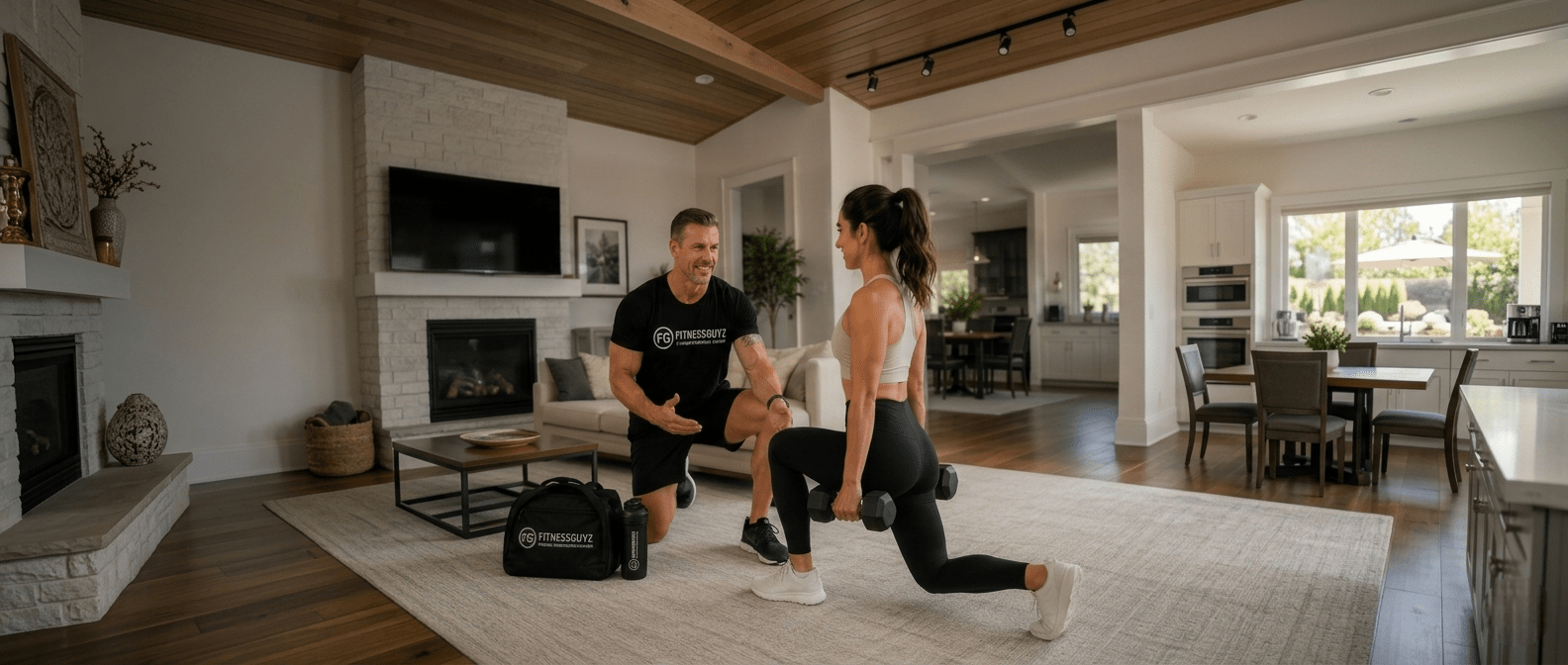
- Training clients at home. Your overhead is low, and clients value the convenience. You will need portable equipment and good insurance coverage.
- Training in HOA and apartment gyms. Residents already pay for the gym through their fees, so many are happy to hire a trainer who comes to them.
- Online coaching. It works well alongside in-person clients, but it is harder to build from nothing.
For pricing, look at what local trainers charge in your city, then decide what your time, travel and insurance cost you. In-person and in-home sessions normally cost more than online sessions. Our in-home sessions start at $65. Set your rates so that you can still earn well after expenses, and write your cancellation policy down before your first client.
Step 8: Get Your First Clients
New trainers often wait for clients to find them. Do the opposite:
- Set up a free Google Business Profile as a service-area business, so people searching for a trainer near them can find you.
- Ask every happy client for a Google review. A handful of real reviews does more for you than any ad.
- Build a simple website with a page for each city you serve, written about that city and not copied from another one.
- Post in local groups such as Nextdoor and neighborhood Facebook pages, and follow the group’s rules on promotion.
- Talk to HOAs, apartment managers and small offices about on-site training.
- Ask for referrals. Offer a thank-you to clients who send a friend.
Expect the first few months to be slow. Consistency matters more than any one tactic.
Another Way to Start: Train Under an Established Brand
Building a name, a website and a client base from nothing takes time. Some trainers would rather start under a brand that already has a website, reviews and a local presence. FitnessGuyz offers exclusive city licenses to independent, certified trainers in South Florida. You train your own clients, and the license gives you a page for your city on our site and access to our brand and support. It involves a monthly fee, and results depend on your own work. Learn more about licensing or call 786-432-2207.
Frequently Asked Questions
Do I need a college degree to be a personal trainer in Florida?
No. There is no degree requirement. Most trainers hold an accredited certification instead.
How much does it cost to start a personal training business in Florida?
It depends on your model. Typical start-up costs include a certification, CPR and AED training, business registration, a local business tax receipt, insurance, and equipment if you train clients at home. Get current prices from each provider and your county.
Can I train clients at their homes?
Yes, in most cases. Check your county or city’s rules for a business tax receipt, and confirm that your insurance covers training at client locations.
Should I form an LLC right away?
Not necessarily. Many trainers start as sole proprietors and form an LLC later. Talk to an accountant or attorney about what fits your situation.
Ready to Get Started?
Starting a personal training business in Florida comes down to a certification, a registered business, insurance and a plan for finding clients. If you want help getting started, or you are a trainer who wants to work under the FitnessGuyz brand, call or text 786-432-2207.
This article is general information, not legal, tax or insurance advice. Rules and fees change, so confirm them with the state, your county and a qualified professional before you start.